Thursday, 19 December 2013

What motivates students in My Class ?


As I look back my 26th years of my teaching in school, thousands of students have graduated from school and each one of them was different from others in terms of his performance, behaviour and learning styles. For teachers, the biggest challenge is to keep students engaged, challenged and self-motivated in the learning process.
       Now I adopt a strategic approach to connect with students. As they join my class, I identify their skills, learning styles and interest in games and co-curricular activities. Some are good sportsmen, dancers, actors, debaters, artists, mountaineers, friendly, shy and many other similar traits.
     Students feel highly motivated in a class when a teacher is able to
a)      Connect with them by acknowledging their achievements in all fronts and not just academics.
b)      Accept that each student is different and learns differently.
c)       Uses students’ centric approach and allows flexible learning outcome. (a slow learner may be given a little extra time or questions with lesser difficulty level.


Sunday, 1 December 2013

The Great Indian skill called 'Jugaad'!

I was pleasantly surprised when I came accross a so called 'jugaad'  at the langar (community kitchen) at the Gurugwara Paonta Sahib today. The water dispenser used to serve water to the sangat (devotees) was constructed from a tank on a trolley that was connected to a bicycle handle. The handle was used to maneuver the tank and the breaks were used to control the flow of water from the tank, helping serve water conveniently and without spilling a drop! It was a great innovation, using resources available locally to create something of convenience and use.
This skill of creativity and innovation is a consequence of limited availability of resources. It is this skill that we educators need to encourage our students to develop. To be able to use inexpensive resources available locally not only helps us to find an alternative and affordable solutions to many problems, but also helps us recycle, reduce imports and conserve our natural resources.

Sunday, 24 November 2013

VALUE THE LIFE OF ALL CREATURES AROUND US.............


While  in the US for my Fulbright Teacher Exchange Program, I noticed and wondered at the fact  that  the animals there had more value to their lives than human life in India.The fact that I did not see a single stray cat or dog there really amazed me! I attributed this to the difference between the developed countries and the developing world. I thought we were too busy trying to make two ends meet,  improve our lifestyle, fight the bad political system etc etc. A shocking incident later, today I think we have no one to blame but ourselves!


I was at a stationary shop in the neighborhood market getting a photocopy of a document I required for my daughter’s passport. I noticed  that the young boy at the photocopier was interested in some activity that was going on in the corridor in front of the shops, a few yards away. I turned to look and  saw a group of men cheering and kicking something around. I assumed they were playing a game. I paid the shopkeeper and turned to walk back home. As I approached the group, I was shocked beyond belief to see that the men were kicking around a mongoose, that must have strayed into a shop. One of them gave the animal such a kick that he landed on the bonnet of a car parked nearby. In the meantime, I had reached the venue of this activity . The men looked at me sheepishly, and the mongoose took the distraction for a fraction of a second to scamper away. I do not know if he would have lived after the massive abuse at the hands of these men. I must add here that these men were around eight in number and were in their 20s and 30s. They were not immature youngsters or school going boys! Before I could blink, they slunk away and just disappeared into the market, just like the mongoose. In any case,  their so called entertainment  was over!!!


I walked back home in a daze, kicking myself for not having spoken. The least I could have done was  to have given them a piece of my mind. The poor animal has been in my mind since then. We humans destroy the  natural habitat of so many creatures like this mongoose, and when they stray into our homes or our neighborhood, because they have no place to go, we either kick them or kill them.:(


We as a people do not respect and value our environment, our trees, our  wildlife, our pets and our other resources, hence land up  not  valuing  our own lives.
Today I have learned that no matter how much we may progress, we will never add  any value to our lives unless we learn to value all the things that nature has given us, which we take for granted!


Wednesday, 20 November 2013

Mobile Maths games


These are some of the android based mobile games that I have allowed my students to play in the class.  First one is called "Math manic",  the students are supposed to combine number to get the required addends.  Because of the time constraints children have to count faster.  There are various levels in this game. This one is quite easy.

In the second game called math workout helps the students to test their mental maths with the combination of all four operations.  This has four very interesting games like (1) Addition and Subtraction  (2) Multiplication and Division (3) I’m feeling clever  (4) The Brain Cruncher (5) Online World Challenge (6) Math Blaster Challenge

Brain Cruncher was the best one I liked. They were asked to add, subtract, multiply or divide a series of numbers continuously for a minute using single or double digit number. The number and the operation appear one by one and the child cannot go back and see the previously asked numbers. There were three levels (1) Low pressure (2) Medium Pressure and (3) High Pressure. I called the girls one by one and allowed them to play on my mobile. The condition I put was that they were not allowed to count using fingers. The students were shaking their hands and speaking the numbers as the pressure was developing specially while subtracting using two digit number and sometimes one digit too. At the end of their chance the students realised how good or bad their mental calculation was. They promised to play the game on their mobile while at home.The child whose numerical ability was good could reach medium pressure. Parents and teachers can improve their children's numerical ability by asking them orally (only dodging in case of multiplication tables) instead of making them write or recite the tables.  

The Third Game puzzles with matches it has two varieties like to make either a (1) shape or (2) Number using matches.  The student cannot reach the second level unless she clears the first one.Solutions are given for each of the lateral thinking puzzle, but students will get much more from solving the puzzle themselves rather than from just being told the solution.

The eye and hand co-ordination improves by playing these games.  Since these are mobile application the children are engaged while travelling and improving their mental calculation and logical thinking. As a teacher I was encouraged to try them before giving it to my students.  We may find it difficult, as do many adults who are linear thinkers, but don't underestimate that students will experience the same level of difficulty.  It will be a surprise at how some of them do with these puzzles. Just like our body need exercise, the mind too will need some to stay sharp. Like physical fitness mental fitness can be achieved by playing intelligent games and activities. Go ahead, download and try it yourself, with your students and kids.

Cheers,
Vasumathy

Monday, 18 November 2013

A Mother’s concern about her child---
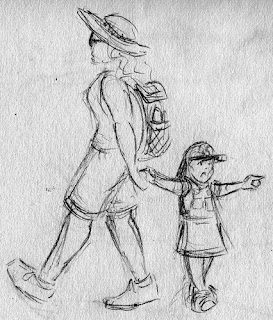


This Diwali, I went to meet one of my friend, a very successful businessman and running his own Senior Secondary School, to extend Diwali greetings. His son is studying in one the most reputed schools in the city and the family is proud to acknowledge so. How happy the family was, when his son got selected through a draw system for admission in Prep I, equivalent to LKG. Soon, his academic progress started bothering him and the family. His wife and the grandmother of the child looked quite worried and expressed concern about the inability of the child to perform at par with other children in his class. The mother complained about his slow learning, and not been able to remember the alphabets or numbers. She claims that she tries hard to teach him but the child forgets everything the following day and she has to start again right from the beginning. She got revision assignment sheets from the teacher but the child shows least interest in those papers. The teacher too complained to the mother about his slow progress. The dance teacher told the mother about his inability to remember the steps and was not included in the dance performance put up by the class during the school function

I looked at the child who is as playful as any other normal child. The mother and grandmother expected a remedial measure to correct his learning and develop interest in studies.

I pondered for a while and suggested use of game based teaching. The child likes stories, which all children of his age like. I suggested to use innovative ways to explain concepts, may be story and activity based to attract his maximum attention. The child must feel interested in what he is learning, engaged in what he is doing and happy to work and at the same time challenged to perform and intrinsically rewarded for his new learning. Both the mother and grandmother looked at my face and wondered what kind of methods could they adopt and how can they evolve innovative ways to engage him. They justified doing everything that the teacher told them.

Well, it was the beginning of my further research into what possibly could be the reasons and what more could be done to support the child and the parents in directing effective learning ?

I met the teacher and the head of the Kindergarten in his school, asking what could such parents or the teacher do help the child..

This is a case of desperate parents seeking help to understand real cause of his low pace of learning.
My findings of the case are simple but thought provoking:-

The child in the present case is only 5 years of age. He is playful and has access to all types of toys. He watches cartoon programmes in his free time, which most of the children in present time do. He has every kind of toy with him. Parents being busy are not helping him develop his cognitive processes and letting him experience whatever is exposed to and let the school suggest ways to encourage his engagement. The interest of the child is obviously more in the toys, the TV shows and the games he plays rather in Alphabets or the numbers which are being taught in traditional ways. He is overloaded with information and is perhaps confused what he should really remember.

Then where is the fault. I did talk to another friend of mine, who is a psychiatrist by profession. He put many questions which the parents can only answer better than me:

How is his social behaviour?
How does he react to new things?
Does he break his toys or is destructive by nature?
How are his reflexes to the objects? Slow or fast … and many more such questions…

Well, these are some of the challenges we educators face in our daily routine. I leave this platform open for opinions and suggestions of professionals and educators so that all can benefit from each other’s experiences and learning.


Thanks
J.K.Saini